Is your roof's 20th birthday a cause for celebration, or is it a countdown to a major insurance headache? You've likely heard that a standard roof should last thirty years, but in Eastern Idaho, the calendar is often a liar. It's completely normal to feel uneasy when one contractor says you're fine and another warns of imminent leaks, especially with our unpredictable winters. You deserve to know exactly how long should a roof last when it's constantly battling heavy snow loads, high winds, and intense UV exposure.
We've put together this 2026 guide to give you a realistic timeline based on local conditions rather than generic national averages. You'll learn how to identify the difference between a simple, repairable issue and true end-of-life wear, ensuring you aren't caught off guard by a failing system during a freeze-thaw cycle. We will explore the durability of different materials under the latest Idaho building codes and provide a clear checklist to help you make a confident, informed decision for your home's long-term protection.
Key Takeaways
- See how metal and asphalt shingles hold up against the intense UV radiation found in Idaho Falls and Pocatello.
- Discover how long should a roof last by comparing manufacturer "lifetime" ratings to the actual performance seen in our high-desert environment.
- Learn to spot the physical signs of shingle exhaustion, including curling edges and "sand" collecting in your gutters.
- Explore why annual inspections are the most effective way to prevent the structural stress caused by heavy Rexburg snow loads.
- Understand the critical role that gutter maintenance plays in preventing rot along your roof's edge and siding.
Roof Longevity in Idaho: Manufacturer Ratings vs. Local Reality
When homeowners ask how long should a roof last, they are usually looking for a single, definitive number. However, a roof's true lifespan is defined by its ability to maintain structural integrity. It isn't just about the shingles staying on the deck; it's about the entire system remaining watertight and protecting your home's framing. In our high-desert climate, there is often a significant gap between what a manufacturer's brochure promises and how a roof actually performs over two decades of Idaho winters.
At Ridge Line Roofing and Renovation LLC, we focus on a property's "effective age." A roof installed ten years ago might have the effective age of a fifteen-year-old roof if it has endured heavy snow loads and poor ventilation. We evaluate local wear patterns in Idaho Falls specifically to see how the materials are reacting to our unique environment. Understanding this distinction helps you plan for replacement before a small leak becomes a major structural emergency.
The 30-Year Shingle Myth
Many homeowners choose a 30-year Asphalt shingle expecting three full decades of service. It's vital to remember that these ratings come from controlled laboratory environments. These labs don't replicate the thermal shock we experience in Eastern Idaho, where a roof can go from 90 degrees in the afternoon sun to 40 degrees at night. This rapid expansion and contraction can weaken shingle adhesion over time. Additionally, many "limited lifetime" warranties contain pro-rated clauses that significantly reduce coverage after the first ten years, leaving homeowners responsible for the bulk of the costs if the material fails early.
Why Installation Quality Dictates the Clock
The quality of the initial installation is often more important than the material itself. Proper ventilation is a primary factor. Without it, heat gets trapped in the attic and "cooks" the shingles from the underside, causing them to become brittle and lose granules prematurely. This can shorten the answer to how long should a roof last by a decade or more. We also see many roofs fail early due to improper flashing or a failure to account for local wind requirements. Using a local contractor who understands how to secure a roof against 60-mph gusts is the best way to ensure your investment actually reaches its full potential.
Average Lifespan by Material: What to Expect in Eastern Idaho
Choosing the right material is the biggest factor in determining how long should a roof last. In Eastern Idaho, our homes face a unique set of challenges that don't exist in milder climates. From the intense summer sun in Pocatello to the heavy, wet snow in Rexburg, each material reacts differently to the local environment. Research into the weathering of roofing materials shows that UV radiation and temperature swings are primary drivers of degradation. Understanding these lifespans helps you balance the initial cost against the long-term value of your home.
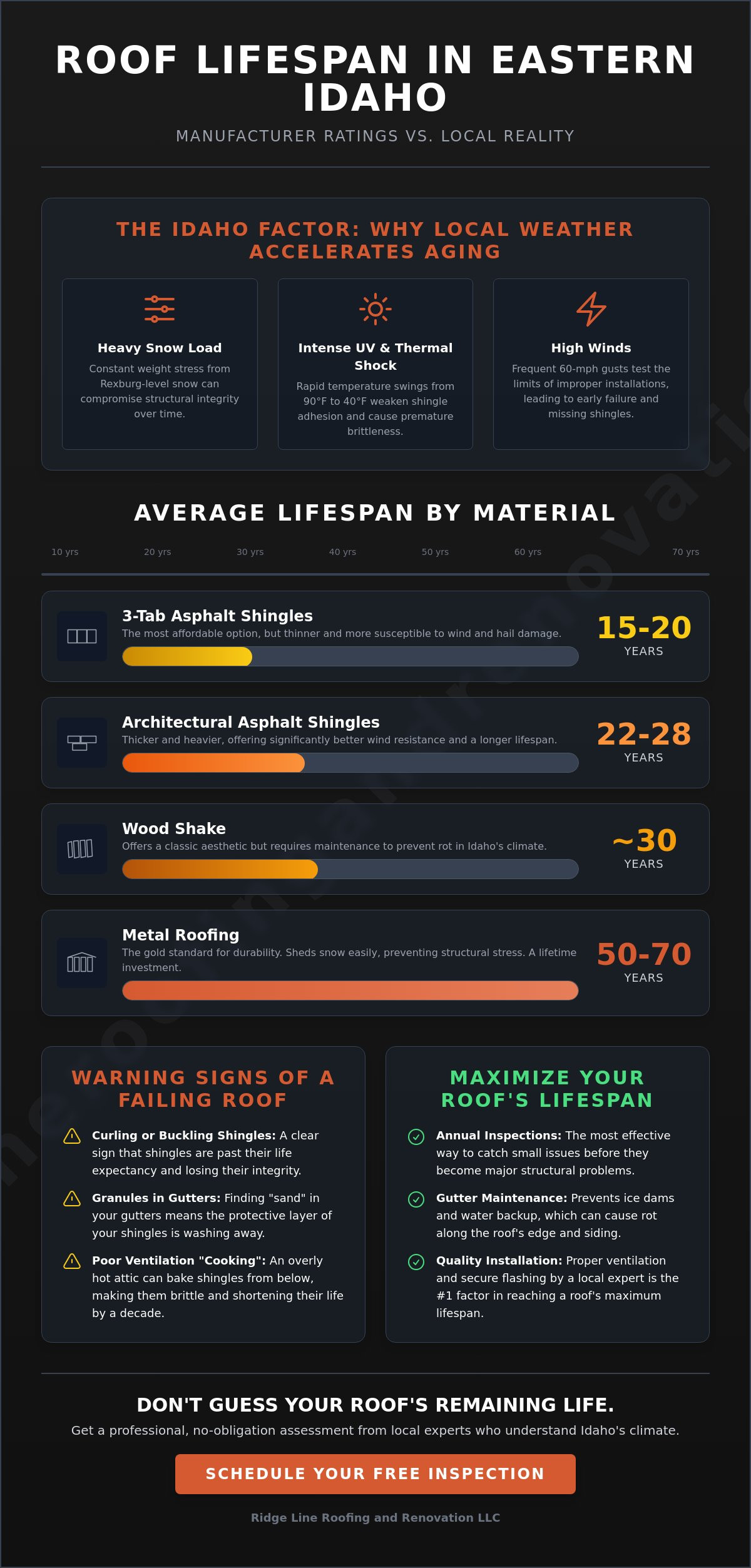
Here is a quick look at the standard lifespans for common Idaho materials:
- 3-Tab Asphalt Shingles: 15-20 years
- Architectural Asphalt Shingles: 22-28 years
- Wood Shake: Approximately 30 years
- Metal Roofing: 50-70 years
Asphalt Shingles: The 15 to 25 Year Window
Asphalt remains the most popular choice due to its affordability. However, not all shingles are created equal. Traditional 3-tab shingles are thinner and typically offer a 15 to 20-year lifespan in our region. Architectural shingles are thicker and provide significantly better wind resistance. These often last between 22 and 28 years. In places like Idaho Falls, frequent hail can shorten these estimates by bruising the shingle surface. You'll know it's time for a replacement when you see shingles curling at the edges or find large amounts of granules in your gutters. If you aren't sure where your current roof stands, a professional assessment can clarify its remaining life.
Metal Roofing: The 50-Year Gold Standard
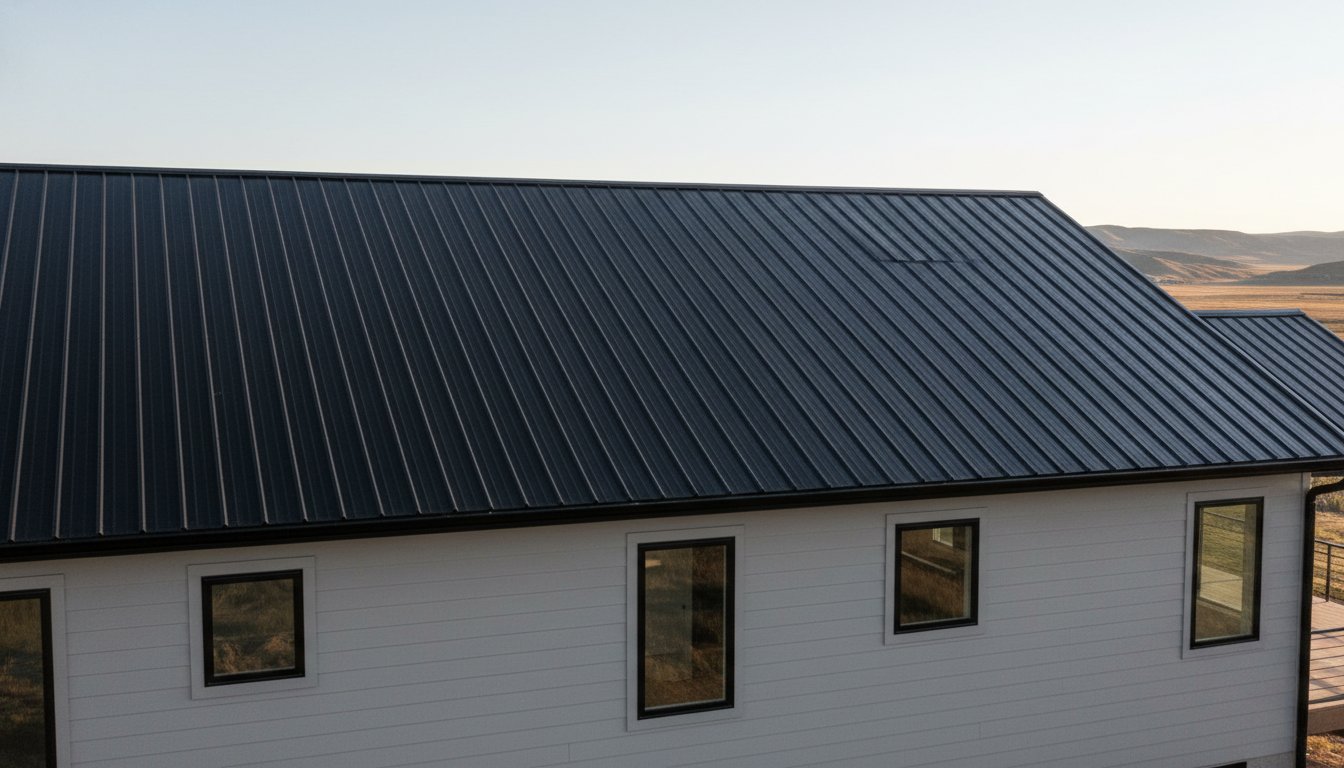
Metal roofing is rapidly gaining popularity across Eastern Idaho. It's incredibly durable. It is often the last roof a homeowner will ever need to install, with lifespans frequently reaching 50 to 70 years. This material is the superior choice for high snow-load regions like Island Park or Teton. Snow slides off easily, which prevents structural stress on the home. For the best results, we recommend standing seam panels over screw-down panels. Standing seam systems hide the fasteners. This eliminates the risk of leaks around screws as the metal expands and contracts. While the upfront cost is higher, the cost-to-longevity ratio is excellent for those planning to stay in their home long-term.
Regardless of what's currently on your house, knowing how long should a roof last requires looking at the specific thickness and quality of your materials. Thicker shingles and high-grade metal always provide a better defense against the high-altitude elements that define our corner of the state. Regular maintenance remains the key to hitting these maximum age targets.
The Idaho Factor: Why Local Weather Accelerates Roof Aging
Idaho's geography creates a relentless environment for residential roofing. While national averages provide a baseline, they rarely account for the specific atmospheric conditions found in the Snake River Plain. When determining how long should a roof last, you have to look beyond the calendar and evaluate the physical toll taken by high-altitude exposure and extreme temperature swings. These local factors can age a roof significantly faster than the same materials installed in a coastal or humid climate.
The "Freeze-Thaw" cycle is particularly aggressive in Eastern Idaho. In the spring and fall, we often see temperature swings of 40 degrees or more within a single day. This causes roofing materials to expand and contract rapidly. Over several seasons, this movement can pull nails loose and break the adhesive seals between shingles. Once those seals are broken, the high winds common to the Snake River Plain can easily lift older shingles, leaving the underlayment exposed to the elements. Additionally, heavy snow loads create static pressure on the roof deck, testing the strength of the underlying structure every winter.
UV Degradation at High Altitudes
In cities like Idaho Falls and Pocatello, the elevation sits at 4,400 feet or higher. This higher altitude means there is less atmosphere to filter out damaging ultraviolet rays. These rays penetrate the surface of petroleum-based shingles and break down the bitumen, which is the essential binder that holds the shingle together. As the bitumen degrades, the shingles become brittle and lose their protective granules. UV degradation is the primary chemical cause of shingle failure in Idaho. Because of this intense exposure, south-facing roof slopes in Idaho often fail 3-5 years before north-facing ones. The constant sun exposure accelerates the aging process on the side of your home with the most direct contact.
Ice Dams and Moisture Intrusion
The winter months bring a different set of challenges that can end a roof's life early. Ice dams are a common sight across our region. They form when heat escapes from your attic and melts the bottom layer of snow on your roof. This water flows down to the cold eaves and refreezes, creating a block of ice that prevents further drainage. Standing water then backs up under the shingles, where it can seep into the roof deck. This moisture intrusion rots the wood and compromises the structural integrity of the entire system. Proper attic insulation and well-maintained gutter systems from Ridge Line Roofing are essential to keep air flowing and prevent these dams from forming. By managing how moisture moves off your home, you can significantly influence how long should a roof last despite our heavy winters.
Warning Signs: How to Tell if Your Roof is Failing
Identifying the exact moment a roof moves from "aged" to "failing" is the best way to protect your home from sudden water damage. While the climate factors we discussed provide a theoretical timeline, physical evidence is the most reliable way to answer how long should a roof last for your specific property. You don't always need to wait for a leak to know your system is reaching its limit. Often, the roof will leave clues that its protective capabilities are exhausted.
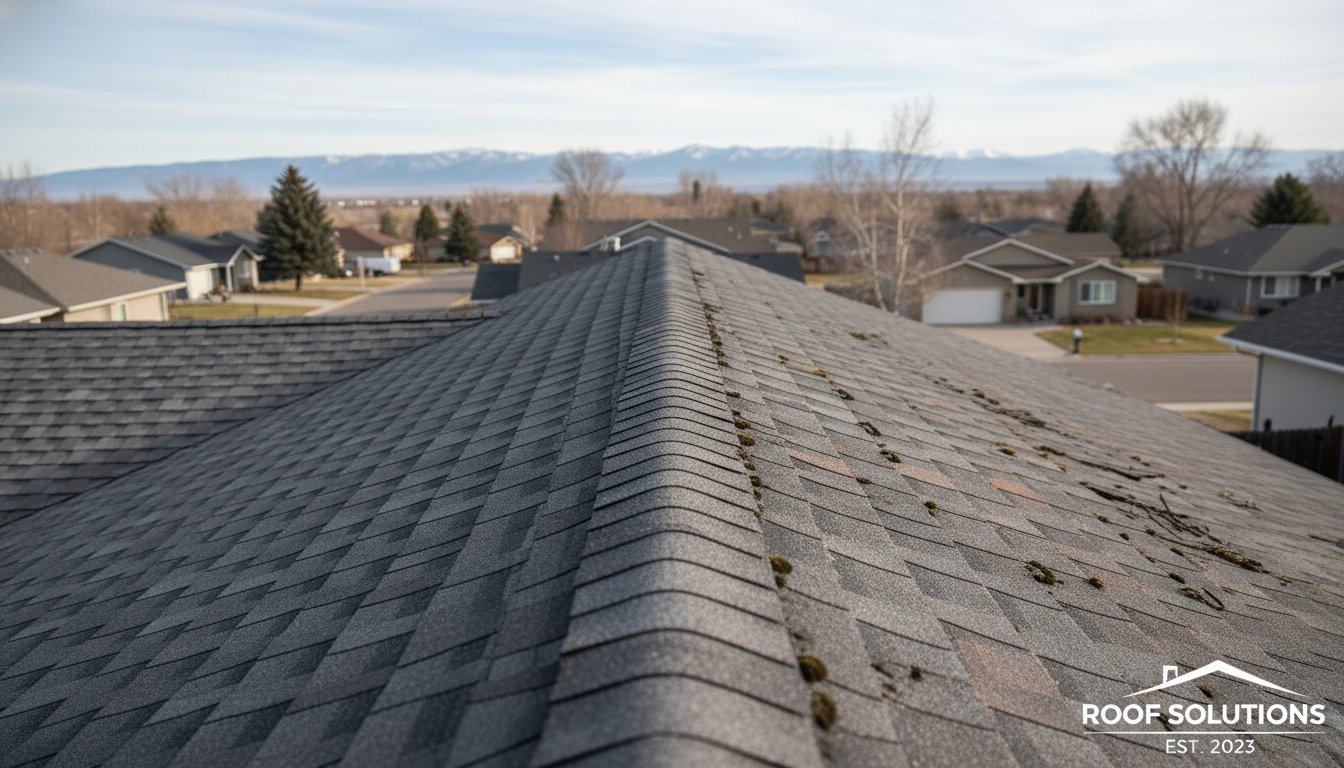
One of the most common indicators is significant granule loss. If you find what looks like coarse, dark sand in your gutters, your shingles are "balding." These granules are the primary defense against the Idaho sun. When they wash away, the underlying asphalt is exposed to rapid UV degradation. You should also look for curling or cupping, where the edges of the shingles turn upward or the centers begin to sink. This is a sign that the material is absorbing moisture and can no longer flatly seal against the roof deck. Other signs to watch for include:
- Cracked or Missing Shingles: Often visible after a typical high-wind event in the Snake River Plain.
- Interior Water Spots: Dark stains on your ceiling or unexplained mold growth in the attic space.
- The Neighbor Rule: If most homes in your subdivision were built at the same time and your neighbors are all replacing their roofs, yours is likely in the same window of failure.
The Ground-Level Inspection Checklist
You can perform a preliminary check without ever stepping onto a ladder. Grab a pair of binoculars and walk your property line. Look for "shadows" on the roof surface; these dark patches usually indicate where granules have completely worn away. Check the alignment of your gutters as well. If they appear to be sagging or pulling away from the house, it may be a result of the heavy snow loads from the previous winter, which can also damage the roof's edge and fascia boards.
When a Repair is Enough vs. Full Replacement
Not every problem requires a total overhaul. If your roof is relatively young and you only notice an isolated issue near a chimney or vent, an emergency roof repair might be all you need to restore the seal. We generally suggest the 25% rule: if more than a quarter of your roof shows signs of damage or wear, a full replacement is usually the more responsible financial choice. Avoid the temptation to "layer" new shingles over old ones. While it might seem cheaper, it traps heat and moisture, which we know significantly shortens how long should a roof last in our extreme climate.
Maximizing Longevity: Maintenance Tips for Idaho Homeowners
Maintaining a home in Eastern Idaho requires a proactive mindset. While we've discussed the environmental factors that dictate how long should a roof last, your personal maintenance routine is the variable you can actually control. Annual inspections are a necessity here rather than a luxury. The extreme seasonal shifts from sub-zero winters to blistering summers put a strain on every component of your roofing system. Catching a small issue in the spring can prevent a total failure during the first heavy snowfall of December.
Gutter cleaning is your primary defense against roof-edge rot and siding damage. When gutters are clogged, water backs up under the shingles at the eave. This is exactly where ice dams thrive. Similarly, removing heavy snow buildup is vital for the health of your home. While most modern roofs are built for Idaho snow loads, excessive weight can lead to structural sagging or micro-cracks in shingles. Ridge Line Roofing provides professional assessments to ensure your roof deck and underlayment are handling these stresses correctly.
Post-Storm Protocols for Idaho Falls
The Snake River Plain is famous for its wind and occasional hail. After a significant weather event, you should immediately document any visible damage. Taking photos of shingle debris in the yard or dents in your siding can be helpful if you need to file an insurance claim. If you spot a hole or a missing section, immediate tarping is critical. This prevents secondary interior damage to your insulation and ceilings while you wait for a permanent fix. These small steps help determine how long should a roof last by preventing moisture from settling into the structure.
Professional Maintenance vs. DIY
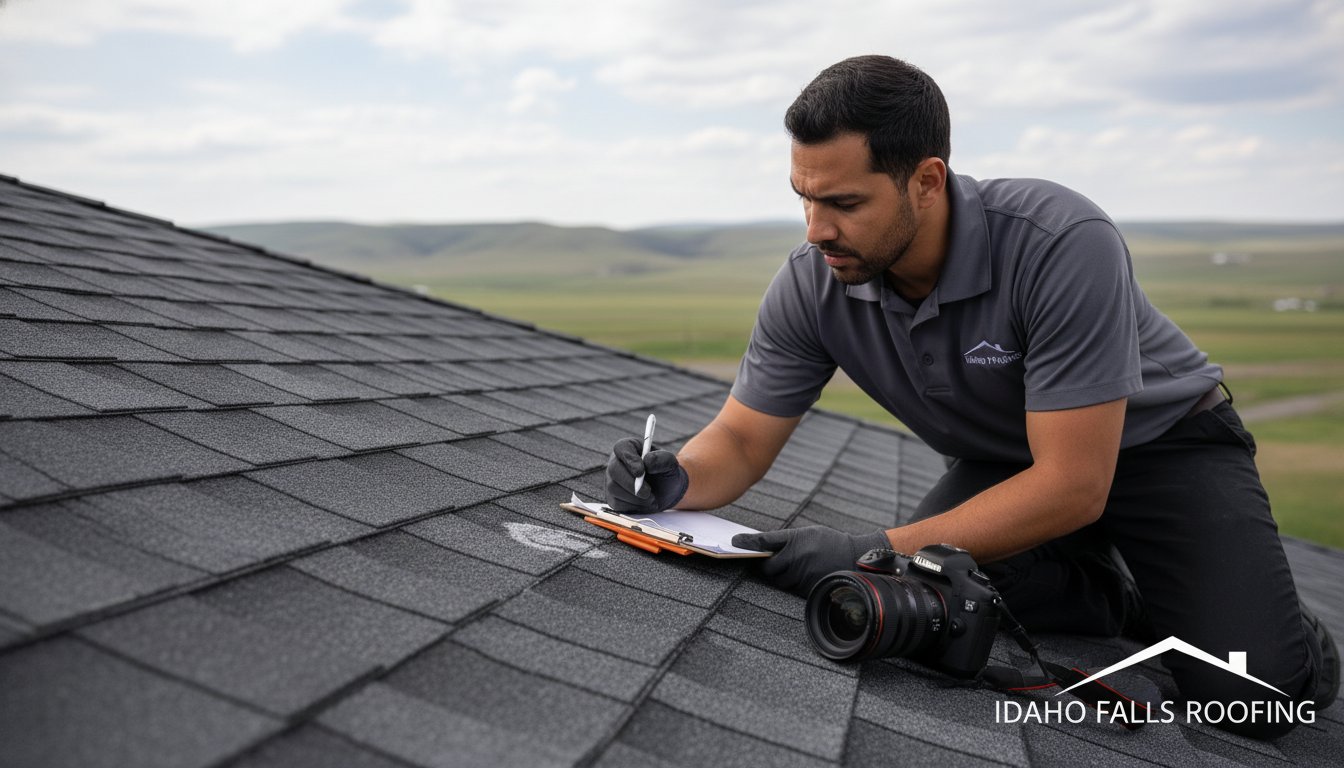
It's tempting to climb up and check things yourself, but there are real risks. During the summer heat, aged shingles become incredibly brittle. Walking on them can cause more damage than the inspection is worth. A professional roofer also looks for things a homeowner might miss, such as a cracked pipe boot or failing flashing around a chimney. These small rubber or metal components often fail years before the shingles do. Catching these early ensures you get the full value out of your investment, especially since construction costs in Idaho have risen with recent population growth. A steady hand and a trained eye can spot the difference between a simple repair and a necessary replacement.
Schedule a professional roof inspection with Ridge Line Roofing and Renovation.
Securing Your Home Against the Idaho Elements
Understanding how long should a roof last in Eastern Idaho involves more than just reading a manufacturer's warranty. It requires a clear-eyed look at how our high-altitude sun and heavy winters impact your specific materials over time. Whether you have asphalt shingles nearing their twenty-year mark or are considering the longevity of a durable metal system, the goal is always long-term safety and peace of mind. By staying ahead of annual maintenance and recognizing early warning signs like granule loss or curling, you protect your home’s structural integrity and avoid the stress of emergency leaks.
At Ridge Line Roofing, we bring over 20 years of local Idaho experience to every project. We are specialists in both metal and asphalt systems; we're also locally owned and operated right here in Idaho Falls. We believe in transparent communication and meticulous craftsmanship because we're invested in the safety of our neighbors. If you’re uncertain about the current state of your roof, we provide the clarity and expertise you need to make the right decision for your property.
Get a Free, Reassuring Roof Estimate from Your Local Idaho Experts. We look forward to helping you keep your home safe and dry for many years to come.
Frequently Asked Questions
How long does a typical asphalt shingle roof last in Idaho Falls?
An asphalt shingle roof in Idaho Falls usually lasts between 15 and 28 years. This wide range depends on the specific grade of shingle you choose and how much direct sun your home receives. Basic 3-tab shingles tend to fail closer to the 15-year mark, while high-quality architectural shingles can often withstand our climate for over 25 years with proper attic ventilation.
Does a metal roof really last 50 years in heavy snow?
Yes, a professionally installed metal roof can easily last 50 to 70 years in heavy snow regions. Metal is ideal for places like Rexburg or Island Park because its smooth surface allows snow to slide off before it becomes too heavy. This prevents the structural stress and moisture buildup that often shorten the lifespan of other roofing materials during long Idaho winters.
Will my insurance pay for a roof that is just old?
Insurance companies generally do not pay for a roof replacement that is required simply because of age. Most policies are designed to cover sudden, accidental damage from events like a severe windstorm or a hail strike. If your roof is failing due to normal wear and tear or reaching the end of its expected life, the cost of replacement is typically the homeowner's responsibility.
Can I wait until my roof leaks to replace it?
It's risky to wait for a visible leak before taking action. By the time you see water spots on your ceiling, the moisture has likely already damaged your attic insulation and the wooden roof deck. Replacing the roof before it fails completely saves you from the added expense of structural repairs, mold remediation, and interior ceiling fixes that follow a major leak.
How does the Idaho wind affect my roof's lifespan?
The consistent high winds in the Snake River Plain can significantly shorten how long should a roof last by weakening the adhesive seals on your shingles. Once the wind lifts a shingle tab, the seal is broken and rarely sticks back down on its own. This creates an entry point for rain and snow, which can lead to hidden rot long before shingles actually blow off the house.
Are architectural shingles worth the extra cost for longevity?
Architectural shingles are almost always worth the extra investment for Idaho homeowners. They are significantly thicker than traditional 3-tab shingles and carry much higher wind resistance ratings. Because they have more material to lose before the roof deck is exposed, they typically provide an extra seven to ten years of reliable protection against our intense high-altitude UV rays.
What is the best time of year to replace a roof in Eastern Idaho?
The ideal time for a roof replacement is from late spring through early autumn. Roofing shingles need a period of consistent warmth for their adhesive strips to activate and create a permanent, watertight seal against the deck. While emergency repairs can happen at any time, scheduling your full replacement during the warmer months ensures the best possible performance from your new materials.
Do solar panels affect how long my roof will last?
Solar panels can protect the shingles underneath them from UV damage, but they also make it harder to inspect the roof for issues. While we don't install solar systems, we recommend having a professional evaluate how long should a roof last before you put panels on top. If your roof is more than 15 years old, it's usually best to replace the shingles first to avoid the cost of removing the panels later.