The most dangerous roof damage from an Idaho Falls windstorm isn't the shingle you see on your lawn; it's the seal you can't see from the ground. When local gusts reach the ultimate wind speeds of 115 mph, they don't always rip materials away. Often, the wind simply lifts shingles enough to break their water-tight bond. You're likely worried that a hidden leak is already inviting mold into your attic or that a "storm chaser" might try to rush you into a bad contract. It's natural to feel overwhelmed by the insurance process, especially with the separate wind deductibles common in 2026. Finding reliable wind damage roof repair Idaho Falls residents can depend on is about more than just aesthetics; it's about structural integrity.
We believe every homeowner deserves a clear path to recovery that doesn't involve guesswork. This guide will teach you how to identify subtle signs of storm damage, document evidence for your insurance adjuster, and ensure your repairs meet the 2018 International Residential Code. We'll walk through the importance of ordinance or law coverage and how to verify a contractor's local license. By the end of this article, you'll have a step-by-step plan to restore your roof's health. You can face the next Eastern Idaho winter with total confidence that your home is protected by high professional standards.
Key Takeaways
- Learn how the high-speed gusts of the Snake River Plain and Idaho’s extreme temperature swings specifically target the integrity of your roofing materials.
- Identify the difference between obvious missing shingles and hidden "wind uplift" that breaks adhesive seals without being visible from the ground.
- Master a step-by-step response plan for wind damage roof repair Idaho Falls residents can follow to document damage and handle insurance claims with confidence.
- Discover the critical safety steps to take immediately after a storm to protect your family and prevent secondary issues like interior mold.
- Understand how to vet contractors to avoid "storm chasers" and ensure your roof repairs are performed by a partner invested in our local community.
The Reality of Wind Damage in Idaho Falls: Why Our Local Climate is Unique
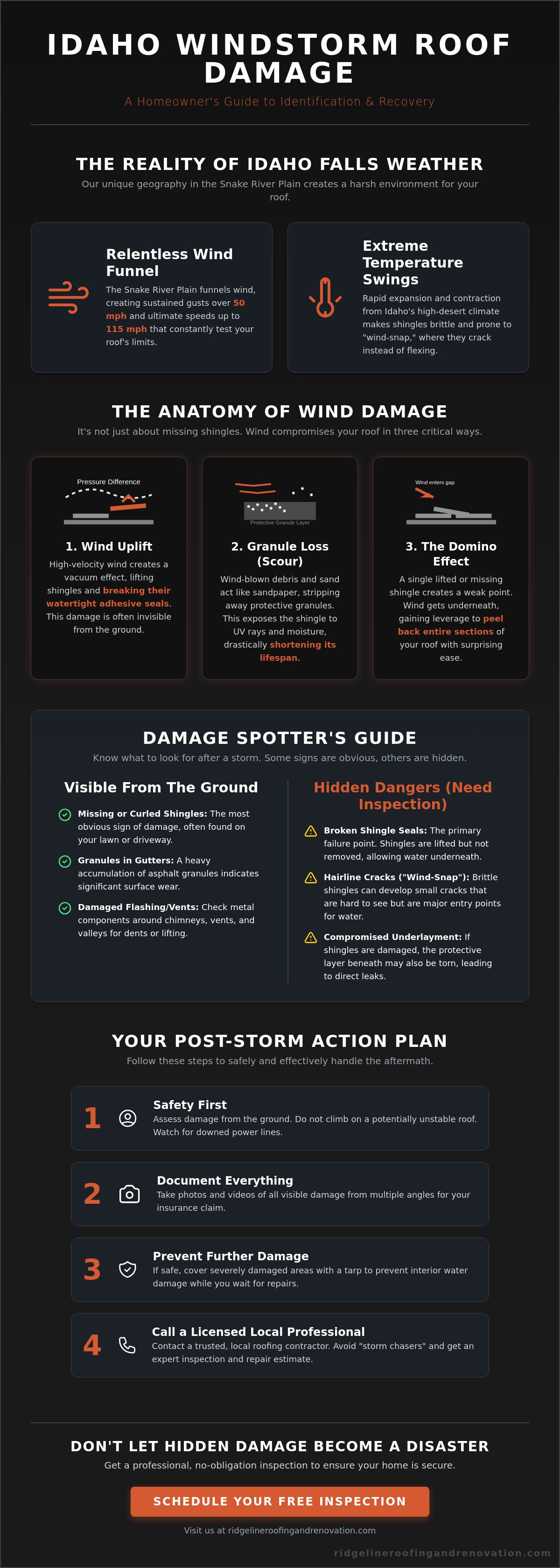
Living in the Snake River Plain means accepting that wind is a constant neighbor. Our geography acts as a natural funnel, squeezing air between mountain ranges and accelerating it across the valley floor. This creates a relentless environment for residential structures. While many regions experience wind as a temporary event, Idaho Falls homeowners deal with sustained pressure that tests the limits of their home's exterior. Understanding how roofs are constructed to handle these environmental loads is the first step in recognizing when your home's defenses have been breached. Local building codes, like the 2018 International Residential Code adopted by the City of Idaho Falls, account for wind speeds of 90 mph and ultimate gusts up to 115 mph. However, even code-compliant roofs can suffer when high-velocity air meets our unique high-desert climate.
The real culprit often isn't just the wind speed; it's the temperature. Idaho's extreme seasonal swings cause shingles to expand and contract rapidly. This process makes asphalt shingles brittle over time, leading to "wind-snap" where the material breaks rather than flexing. You might notice that a storm hitting Ammon or Iona causes severe damage to one street while leaving another untouched. These localized gusts are common in our open landscape, making professional wind damage roof repair Idaho Falls services essential for those caught in the path of a micro-burst. Minor issues left unaddressed before the first frost often transform into major structural failures once the weight of Idaho's heavy snow arrives.
Understanding the Snake River Plain Wind Patterns
The sustained high-velocity winds in our area frequently exceed 50 mph, which is enough to lift older shingles or those with weakened adhesive. Beyond the air pressure itself, our wind carries debris that acts as a secondary threat. It isn't uncommon to see heavy tree branches or even large tumbleweeds propelled with enough force to strip granules from a roof's surface. This "shingle scour" removes the protective layer that guards your home against UV rays and moisture, shortening the lifespan of your roof significantly.
The Seasonal Risk: Why Post-Storm Timing Matters
Timing is everything when it comes to storm recovery in Eastern Idaho. If a windstorm compromises your roof's seals in the autumn, you have a very narrow window to act before the ground freezes and the snow begins to pile up. A broken seal allows moisture to seep under the shingles, where it freezes and expands. This cycle creates ice dams that exploit even the smallest gaps. Getting a professional assessment before winter hits ensures that your home remains a dry, safe sanctuary during our most punishing months.
How High Winds Compromise Your Roof’s Integrity
Wind damage isn't always about brute force. It's often about the subtle laws of physics. When high-velocity air travels over your home, it creates a vacuum known as wind uplift. This pressure difference pulls upward on your shingles, trying to detach them from the roof deck. If you need wind damage roof repair Idaho Falls homeowners often find that this invisible force has compromised large sections of their roof without a single shingle blowing away. The vacuum effect is strongest where the wind must change direction quickly, which is why your roof's edges and peaks are the most vulnerable zones.
Granule loss is another serious issue that often goes unnoticed. We call this "shingle scour." In the high-desert environment of Eastern Idaho, wind carries fine particulates, dust, and sand. These particles sandblast your roof, stripping away the protective asphalt granules. Without these granules, your roof loses its ability to shed water and resist UV damage. This makes the material brittle and far more likely to fail during the next storm cycle. While a few granules in your gutters are normal, a heavy accumulation after a wind event is a sign that your shingles are losing their defensive layer.
Once the wind finds a weak point, a domino effect begins. A single missing shingle creates a "pocket" where wind can get underneath the surrounding materials. This increases the leverage the wind has, allowing it to peel back entire rows of shingles with relatively little effort. You will often see this damage concentrated on the corners and ridges of your home. These areas experience the highest pressure differentials, making them the front lines of your home's defense. For those dealing with widespread regional issues, looking into FEMA's guidance on disaster assistance can provide a broader perspective on recovery steps after a major weather event.
The Physics of Shingle Failure
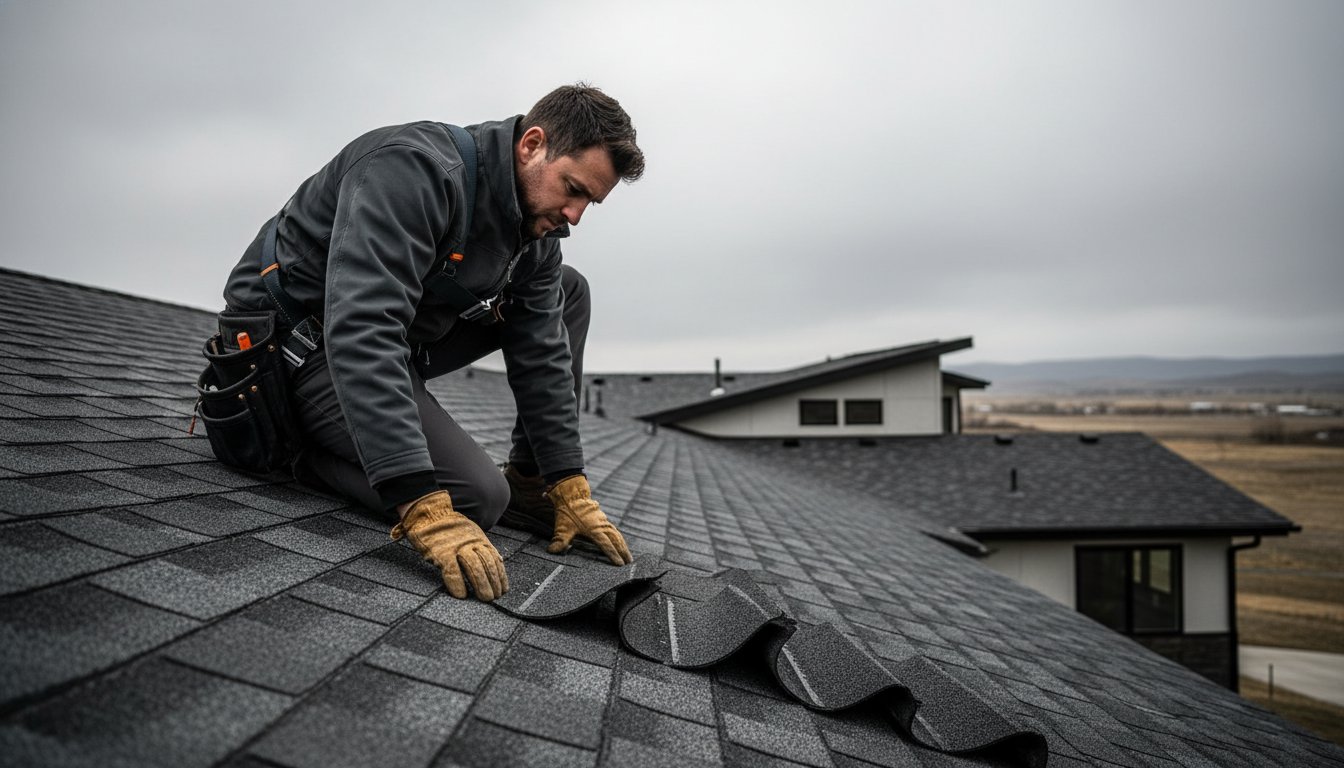
Thermal seal failure is the primary cause of wind uplift. When this adhesive bond breaks, the shingle is no longer secured to the course below it. In high winds, this loose tab bends backward repeatedly. This "wind-snap" eventually cracks the shingle's internal reinforcement mat, leaving a permanent crease. In extreme cases, shingles suffer from nail pull-through. The wind force is so intense that the shingle is literally ripped over the head of the nail, leaving the fastener behind but the wood deck completely exposed to the elements.
Secondary Damage: Debris and Gutter Strain
High winds can turn your gutters into "sails." If the wind gets behind the trough, it places immense strain on the fascia boards, potentially pulling the entire system away from your home. Residents in the Rexburg and Pocatello corridors also face impact damage from flying debris. Even small objects can crack brittle shingles or dent the metal flashing around your chimney and vents. If you suspect your home's exterior has been compromised, a professional emergency roof repair assessment can identify these hidden points of failure before they lead to interior leaks.
Signs of Wind Damage: Identifying Visible and Hidden Shingle Issues
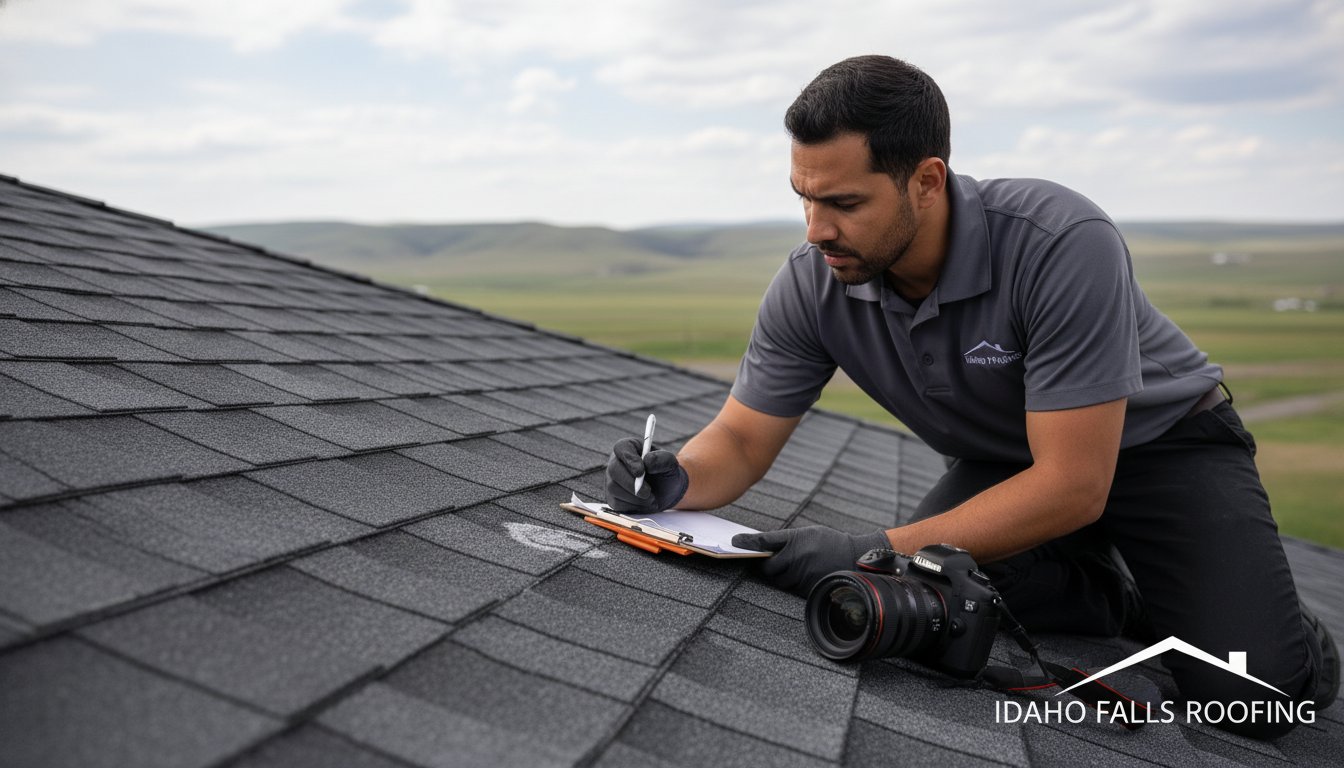
Identifying damage after a storm requires a keen eye and a methodical approach. While missing shingles are easy to spot, the most common need for wind damage roof repair Idaho Falls homeowners encounter involves more subtle indicators. Look for "creased" shingles, which appear as dark horizontal lines near the top of the shingle tab. These lines indicate that the wind has folded the shingle back, breaking the internal fiberglass matting. Even if the shingle lays flat again after the wind dies down, its structural integrity is gone and it no longer protects your home.
Check your gutters and downspouts for signs of distress. If you find a sudden accumulation of granules that look like coarse sand, your roof has likely suffered from the "shingle scour" we discussed previously. Inside your home, keep an eye out for yellow or brown water spots on the ceiling. In the attic, turn off the lights during the day; if you see "stars" or pinpricks of daylight coming through the roof deck, your shingles have been displaced or punctured. These small openings are enough to allow significant moisture into your insulation during the next rain or snow event.
The "Invisible" Threat: Broken Thermal Seals
Many homeowners assume their roof is fine because it looks intact from the sidewalk. However, a broken thermal seal is a silent hazard that leads to long-term issues. You can safely check for "lift" by gently testing a few shingles at the roof's edge or near a corner. If the tab lifts easily with your fingertip, the adhesive bond has failed. A shingle that has lifted once will rarely reseal on its own because dust and debris quickly coat the sticky strip, preventing it from bonding again. For more detailed strategies on protecting your structure, FEMA's guide to minimizing wind damage provides excellent technical insights into how these small failures lead to larger water intrusion issues.
Inspecting Your Property from the Ground
You don't need to climb a ladder to find evidence of a storm's impact. Walk your property and look for these common indicators of trouble:
- Pieces of shingle material, torn tabs, or metal trim in the grass or flower beds.
- Distorted or loose flashing around the base of the chimney or along roof valleys.
- Sections of the roof that appear "fuzzy" or have a different texture, indicating heavy granule loss.
Pay attention to the sounds your house makes. On a breezy day, listen for "chatter" or a rhythmic flapping sound coming from above. This often indicates a loose shingle tab or a piece of metal fascia that has been pried loose by the wind. If you notice any of these signs, it's time to call a professional for a drone or ladder-assisted inspection. Professional wind damage roof repair Idaho Falls specialists can identify these hidden issues before they turn into expensive leaks that threaten your home's interior.
Your Step-by-Step Response to Storm Damage and Insurance Claims
Once the storm passes, your first instinct might be to grab a ladder. Please resist this urge. Safety is the absolute priority. From the ground, check for downed power lines or leaning trees that could compromise your home's structure. If you see any electrical hazards, contact your utility provider immediately. Only after the area is secure should you begin assessing the situation. For homeowners needing wind damage roof repair Idaho Falls professionals can provide a safe, thorough inspection that identifies the hidden "wind uplift" issues discussed earlier without putting you at risk.
Your second step is temporary mitigation. If there are obvious holes or missing shingle sections, using heavy-duty tarps can prevent immediate water entry. This is vital because insurance policies often require you to take reasonable steps to prevent further damage. Document everything. Take high-quality photos of the damage from several angles before you install any temporary covers. A detailed roofer's report carries significant weight with insurance adjusters. It provides a professional scope of work that ensures the adjuster doesn't overlook technical requirements like code-compliant flashing or ice and water shield installation.
Working with Your Insurance Provider in Idaho
Filing a claim after a major wind event in Eastern Idaho requires clear communication. Many 2026 insurance policies now feature separate, higher deductibles specifically for wind and hail damage. You should also understand the difference between Replacement Cost Value (RCV) and Actual Cash Value (ACV). RCV policies typically cover the full cost of a new roof minus your deductible. ACV policies only pay the depreciated value based on your roof's age. We highly recommend having your roofing contractor present during the adjuster's visit. This ensures that every broken seal and scoured shingle is accounted for in the final estimate.
Repair vs. Replacement: Making the Right Call
Deciding between a patch job and a full replacement often comes down to the extent of the damage. If a significant portion of your roof's surface is compromised, building codes and "Ordinance or Law" coverage may necessitate a full residential roof replacement to ensure structural integrity. We also evaluate the age of your roof. If your shingles are near the end of their service life, investing in multiple repairs is often less cost-effective than a total restoration. At Ridge Line, we help you weigh these factors against your long-term protection goals, ensuring your home is ready for the next winter cycle.
Choosing a Trusted Local Partner for Roof Repair and Restoration
Choosing the right partner for wind damage roof repair Idaho Falls is a decision that impacts your home's safety for years to come. In the wake of a major storm, "storm chasers" often flood our neighborhoods. These are out-of-state contractors who follow weather patterns to find quick work. While they might offer fast timelines, they lack the local accountability required for the Eastern Idaho climate. If a leak develops during the next heavy snowfall, these companies are often long gone. A local partner with over 20 years of experience understands the specific building codes and environmental stresses unique to the Snake River Plain. We've seen how regional winds interact with local architecture, and we apply that knowledge to every project we undertake.
We take a comprehensive view of your home's exterior. Wind damage rarely stops at the shingles. It often affects your siding installation or puts immense strain on your gutter installation. Our team provides meticulous craftsmanship across all these areas to ensure total protection for your structure. We believe in transparent communication throughout the entire process, from the initial assessment to the final walkthrough. You aren't just a project on a spreadsheet; you're a neighbor whose home deserves the highest professional standards. This commitment to excellence is why we prioritize long-term durability over quick, surface-level fixes.
The Ridge Line Difference: A Steady Hand in Emergencies
We focus on durability because we know what Idaho winters demand. Whether you need an immediate emergency roof repair to stop a leak or a full residential roof replacement, our process is unhurried and methodical. We plan every detail to ensure your roof meets current 2018 IRC standards. This steady approach avoids the frantic energy of post-storm repairs and focuses on doing the job right the first time. We take immense pride in being a "steady hand" for our community when the weather turns harsh. Being a local business means we're here to answer your questions and stand by our work long after the shingles are laid.
Ready for a Professional Assessment?
Don't wait for a ceiling stain to confirm that your roof has been compromised. As we've explored in this guide, many wind-related issues like broken thermal seals and shingle scour are invisible from the ground. Identifying these problems early is the best way to prevent mold and structural decay. A professional, unhurried inspection gives you the clarity you need to move forward with confidence. Protect your investment and your peace of mind before the next storm cycle begins. Our team is ready to provide a thorough assessment that reflects our dedication to the Idaho Falls community.
Schedule your professional wind damage inspection with Ridge Line Roofing
Secure Your Home for the Next Idaho Winter
Your home is likely your most significant investment. Protecting it from the unique environmental pressures of the Snake River Plain requires a proactive approach. We've discussed how hidden seal failures and shingle scour can compromise your roof's integrity long before a leak appears in your living room. By identifying these issues early and documenting them correctly for your insurance claim, you prevent the seasonal cycle of ice and snow from causing structural decay. Finding reliable wind damage roof repair Idaho Falls residents can trust is the final step in your recovery.
As a locally owned and operated business with over 20 years of experience, we specialize in both asphalt and metal roofing systems designed for our specific climate. We take pride in offering a steady, professional hand to our neighbors during stressful times. Don't let a minor storm issue turn into a major winter emergency. You can rest easy knowing your roof is prepared to stand strong against the next high-wind event. Our commitment to meticulous craftsmanship ensures your home remains a safe, dry sanctuary for years to come.
Get a Professional Storm Damage Inspection Today
Frequently Asked Questions
How much wind does it take to damage a shingle roof in Idaho Falls?
Damage can occur with gusts as low as 50 mph, especially if your shingles are older or the adhesive seals have weakened over time. While the City of Idaho Falls building code requires roofs to withstand ultimate wind speeds of 115 mph, sustained pressure from moderate storms often lifts shingle tabs. Factors like the wind's direction and the presence of flying debris also influence how much force your roof can handle before failing.
Does homeowners insurance typically cover wind damage to a roof?
Most standard homeowners insurance policies cover wind damage, though many 2026 policies now include separate and higher deductibles specifically for wind and hail. Coverage generally applies to sudden storm events rather than gradual wear and tear. It's important to check if your policy includes "Ordinance or Law" coverage, which helps pay for the additional costs of bringing a damaged roof up to current Idaho Falls building codes.
Can I just replace the missing shingles myself?
You can technically replace individual shingles, but it isn't recommended if you want to maintain your roof's long-term protection. DIY repairs often fail to create a proper thermal seal with the surrounding aged shingles, leaving the area vulnerable to the next windstorm. Professional wind damage roof repair Idaho Falls ensures that new materials are correctly bonded and that your manufacturer warranty remains valid for the life of the roof.
How long do I have to file a roof insurance claim after a wind storm?
Most insurance providers require you to file a claim within one year of the storm event, but you should verify the specific deadline in your policy. Waiting too long makes it difficult to prove that the damage resulted from a specific storm rather than general neglect. Promptly documenting the issue with photos and a professional roofer's estimate is the best way to ensure your claim is processed fairly and efficiently.
What happens if I ignore minor wind damage?
Ignoring minor damage like a single lifted shingle often leads to hidden leaks, attic mold, and saturated insulation. In our Eastern Idaho climate, even small openings allow snow and ice to penetrate the roof deck during the winter freeze-thaw cycle. This moisture eventually rots the wood structure of your home, leading to expensive interior repairs that insurance companies may deny if they determine the damage was neglected over time.
Why are my shingles curling or lifting even if there was no major storm?
Shingles often curl or lift due to poor attic ventilation or the natural aging process rather than a specific weather event. High temperatures in the attic can bake shingles from the underside, causing them to become brittle and lose their adhesive bond. Once this happens, even moderate Idaho Falls breezes can cause the shingles to flap or lift, which is a clear sign that your roofing system is nearing the end of its functional life.
How does Ridge Line Roofing handle emergency repairs in Pocatello or Rexburg?
We provide specialized emergency roof repair services across the entire region, including Pocatello and Rexburg, to stabilize homes immediately after a storm. Our process begins with temporary mitigation, such as professional tarping, to stop active leaks and prevent secondary water damage. We then provide a comprehensive assessment and documentation to help you move forward with a permanent restoration that matches your existing roof and meets all local safety standards.
Will my insurance rates go up if I file a claim for storm damage?
Filing a single claim for an "Act of God," such as a windstorm, typically doesn't cause an individual's insurance rates to increase. However, insurance companies may raise premiums for an entire zip code or region after a widespread weather event. In most cases, the cost of paying for a wind damage roof repair Idaho Falls project out of pocket is far higher than the potential long-term impact on your insurance premiums.