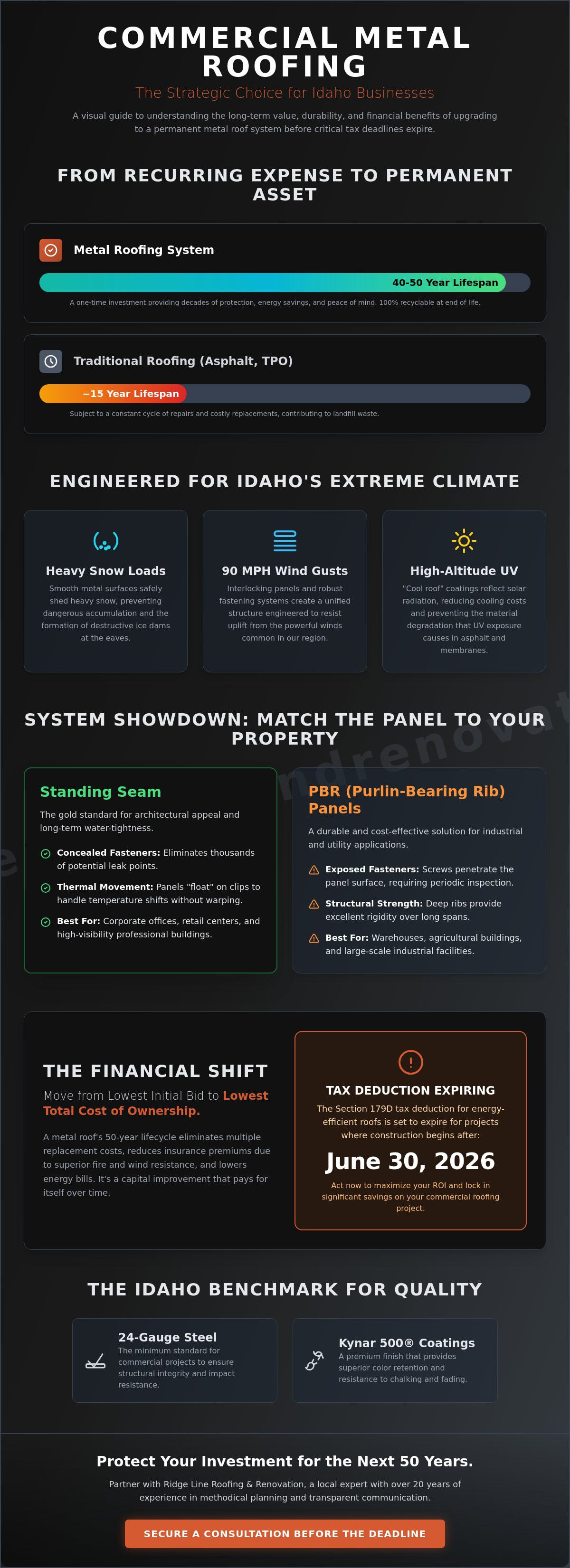
Did you know the federal Section 179D tax deduction for energy-efficient commercial roofs is set to expire for projects where construction begins after June 30, 2026? This means the window to significantly offset the cost of high-quality commercial metal roofing is closing soon. You've likely dealt with the constant cycle of repairs that come with traditional flat roofs in Idaho Falls, especially when heavy snow melt begins or those 90 mph winds kick up. It's frustrating to watch your maintenance budget disappear into a ceiling leak every spring while energy bills continue to climb.
We believe your roof should be a dependable asset, not a recurring headache. This guide will help you master the technical and financial aspects of metal systems so you can secure a maintenance-free roof that protects your building for 40 to 50 years. We'll explore local snow load requirements, energy-efficient "cool roof" technology, and how to maximize your return on investment before the 2026 tax deadlines pass.
Key Takeaways
- Understand why Idaho business owners are shifting to a permanent roof philosophy to eliminate the constant cycle of asphalt repairs and replacements.
- Learn the critical differences between standing seam and PBR panels to determine which system provides the best protection for your specific building type.
- Discover the essential technical standards for commercial metal roofing in Idaho, including why 24-gauge steel and Kynar 500 coatings are the local benchmarks for durability.
- Shift your financial perspective from the lowest initial bid to the lowest total cost of ownership by factoring in insurance premium reductions and 50-year lifecycle savings.
- See how partnering with a local expert with over 20 years of experience ensures your project is handled with methodical planning and transparent communication.
Why Metal is the Strategic Choice for Idaho Commercial Properties
Choosing a metal roof for your facility isn't just about picking a material. It's a structural decision that shifts your building from a cycle of constant repair to a state of long-term stability. For business owners in the Snake River Plain, commercial metal roofing represents a high-performance solution that balances architectural appeal with extreme durability. We've seen a significant shift in 2026 as local leaders move toward a "permanent roof" philosophy. They're tired of the 15-year replacement cycle that often defines asphalt and single-ply membranes.
Our region faces unique environmental pressures. High-altitude UV exposure degrades traditional materials quickly, while 90 mph wind gusts can peel back poorly secured shingles or membrane edges. Metal systems are engineered to withstand these specific forces. Beyond mere survival, these roofs offer exceptional thermal efficiency. By utilizing "cool roof" coatings that reflect solar radiation, large-scale commercial buildings can see a noticeable reduction in summer cooling costs. It's a smart way to manage overhead while protecting your inventory and equipment.
The Idaho Climate Advantage: Snow and Ice Management
Snow is a constant factor for any business in Bonneville County. Because snow loads here are determined on a case-by-case basis by licensed engineers, your roof must be ready for significant weight. Metal is the superior material for managing these loads because its smooth surface allows snow to shed safely before it reaches critical mass. This prevents the formation of ice dams at the eaves, which are a primary cause of internal water damage in commercial properties. When temperatures fluctuate rapidly between freezing nights and sunny days, metal expands and contracts without the cracking common in petroleum-based products.
Comparing Commercial Lifespans: Metal vs. TPO and Shingles
The reality for many Idaho businesses is that traditional commercial flat roofs often begin to fail around the 15-year mark. In contrast, a well-installed metal system often outlasts the building's original mortgage, providing 40 to 50 years of reliable service. This longevity changes the financial math entirely. Instead of planning for a massive capital expenditure every decade and a half, you can focus on growing your business. There's also an environmental benefit to consider. At the end of its very long life, a metal roof is 100% recyclable, which keeps tons of debris out of our local landfills and aligns with modern sustainability standards.
Evaluating Commercial Metal Roof Systems: Standing Seam vs. PBR Panels
Selecting the right system for your building isn't just about aesthetics. It's about matching the engineering of the panel to the specific demands of your business operations. In Idaho Falls, the choice usually comes down to two primary categories: concealed fastener systems and exposed fastener systems. Each serves a distinct purpose, and picking the wrong one can lead to unnecessary maintenance costs or structural issues down the road. While both fall under the umbrella of commercial metal roofing, their performance in high-wind and heavy-snow environments varies significantly.
Beyond the metal itself, the success of your installation depends on the components you can't see. High-quality underlayment is essential for moisture management and thermal breaks. Many modern systems also qualify as cool metal roofing, which helps manage internal temperatures by reflecting solar energy rather than absorbing it into your attic space or warehouse floor. If you're still weighing the pros and cons for your specific facility, our team can help you compare commercial roofing systems side by side to ensure you get the best fit for your budget.
Standing Seam: The Gold Standard for Professional Buildings
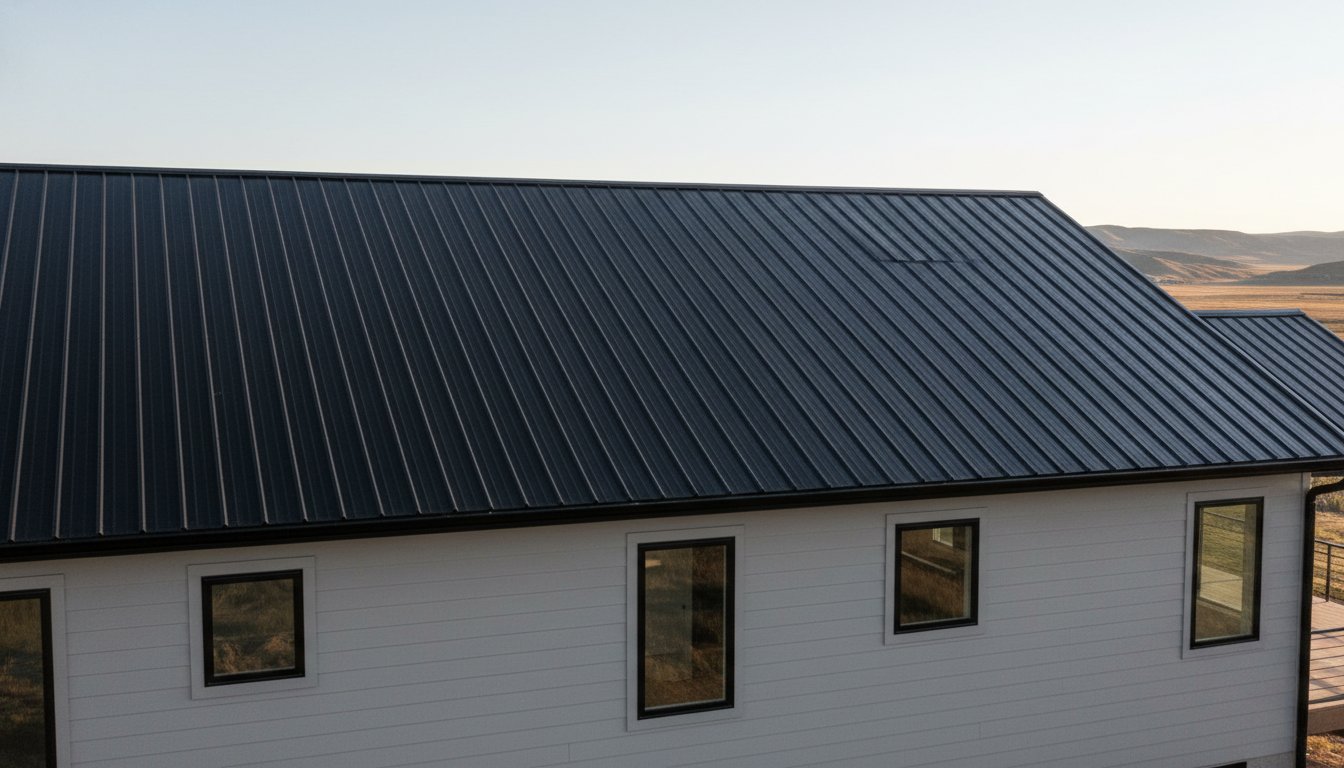
Standing seam is the preferred choice for corporate offices, retail centers, and hospitality venues where long-term reliability is the top priority. These systems use concealed fasteners, meaning the clips and screws are hidden beneath the metal surface. This design eliminates thousands of potential leak points. Because the panels are attached with clips that allow for movement, the roof can "float" as it expands and contracts during our extreme temperature shifts. This flexibility prevents the metal from warping or "oil canning" over decades of use.
R-Panels and PBR: Cost-Effective Durability for Industrial Sites
Purlin Bearing Rib (PBR) panels are the hardworking cousins of standing seam. They're frequently used for warehouses, agricultural buildings, and industrial shops where utility and cost-effectiveness are more important than a sleek profile. These panels use exposed fasteners, which are visible on the surface. While they offer incredible structural strength and a lower initial installation price, they do require more frequent inspections. The rubber grommets on the fasteners can weather over time in the Idaho sun, so a simple maintenance plan is necessary to keep the system watertight. For many large-scale industrial projects, commercial metal roofing using PBR panels provides the best balance of protection and upfront value.
Calculating the ROI: Upfront Costs vs. 50-Year Lifecycle Savings
When you look at a quote for commercial metal roofing, it's easy to focus solely on the initial number. However, the most successful business owners in Idaho Falls look at the "lowest total cost of ownership" rather than just the lowest bid. While a traditional membrane roof might cost less today, it often requires a full replacement in 15 to 20 years. A metal system is a 50-year capital asset. When you spread the installation cost over five decades, the annual expense is significantly lower than any other roofing type.
The financial benefits start almost immediately through insurance premium reductions. Many insurance providers offer discounts for buildings with a Class 4 impact rating, which is the highest level of protection against hail and debris. In Eastern Idaho, where unpredictable storms are common, this rating provides both peace of mind and tangible annual savings. Additionally, Energy Star rated coatings reflect solar heat away from your building. This reduces the load on your commercial HVAC system, lowering monthly utility bills and preventing premature wear on your cooling units. These factors combined often lead to a higher property appraisal, as future buyers recognize the value of a "permanent" roof system.
Maintenance Cost Comparison Over 30 Years
Traditional commercial roofs often enter a cycle of "patch and pray" after the first decade. UV damage and thermal shock lead to cracks that require constant professional attention. In contrast, metal systems are remarkably low-maintenance. Industry standards, such as those found in the Metal Construction Association (MCA) design guide, highlight how these systems maintain structural integrity over decades with minimal intervention. Beyond the repair bills, you must consider the cost of "business as usual." Avoiding a single leak-related shutdown or inventory loss can save your business thousands of dollars in a single afternoon. A simple schedule of annual inspections and basic debris removal is usually all it takes to keep a metal roof in peak condition.
Tax Incentives and Financing for Metal Roofing
The financial case for commercial metal roofing is even stronger in 2026 due to specific federal incentives. Under Section 179D, business owners can deduct the cost of energy-efficient improvements. For projects that meet prevailing wage and apprenticeship requirements, this deduction can reach up to $5.81 per square foot. It's important to act quickly, as this specific deduction is set to expire for projects where construction begins after June 30, 2026. Because metal is considered a durable, long-term improvement, local lenders in Idaho often prefer financing these projects. They see the roof as a secure asset that protects the underlying collateral of the building for the life of the loan.
Critical Selection Criteria: Gauges, Coatings, and Idaho Requirements
Selecting the right specifications for commercial metal roofing in the Snake River Plain requires a balance of engineering and environmental awareness. In our local climate, 24-gauge steel has become the industry standard for commercial applications. While 26-gauge is common in residential settings, the thicker 24-gauge material offers the structural rigidity needed to handle heavy snow loads and high-wind events. It's approximately 10 to 20 percent more expensive than thinner alternatives, but the added resistance to "oil canning" and structural deformation makes it a wise investment for a 50-year building plan.
The coating you choose is just as important as the steel itself. For most professional buildings, we recommend Kynar 500 (PVDF) resin-based coatings over Siliconized Modified Polyester (SMP). Kynar 500 provides superior resistance to chalking and fading, which is crucial given our high-altitude UV exposure. This ensures your building maintains its professional appearance for decades without the finish peeling or losing its luster. If you are ready to discuss the technical requirements for your facility, contact our team for expert commercial roofing guidance.
Choosing the Right Color for Idaho Energy Efficiency
Color choice affects more than just curb appeal. Modern "Cool Roof" pigments allow even darker shades like charcoal or forest green to reflect a high percentage of solar radiation. This technology helps mitigate the "urban heat island" effect, keeping your building and the surrounding Idaho Falls business district cooler during July and August. Selecting a fade-resistant finish ensures your brand identity remains sharp and professional as the decades pass. It also helps you stay compliant with ASHRAE 90.1 energy efficiency standards required for commercial properties in our region.
Wind Uplift and Structural Fastening
The City of Idaho Falls references the 2018 International Building Code, which requires roofs to be designed for basic wind speeds of 90 mph. Proper fastener spacing and the use of UL 580 tested panels are non-negotiable for building safety. In high-wind corridors, we pay meticulous attention to how the panels interface with the existing roof deck. This ensures the entire assembly stays secure during the intense gusts common in Eastern Idaho. In Bonneville County, snow loads must be determined by a licensed engineer based on ASCE 7-22 standards because the weight can vary significantly from one site to another. We also integrate snow guard systems above entryways and sidewalks to prevent "snow slides," protecting your customers and employees from falling ice during the spring thaw.
Partnering with Ridge Line Roofing for Your Commercial Project
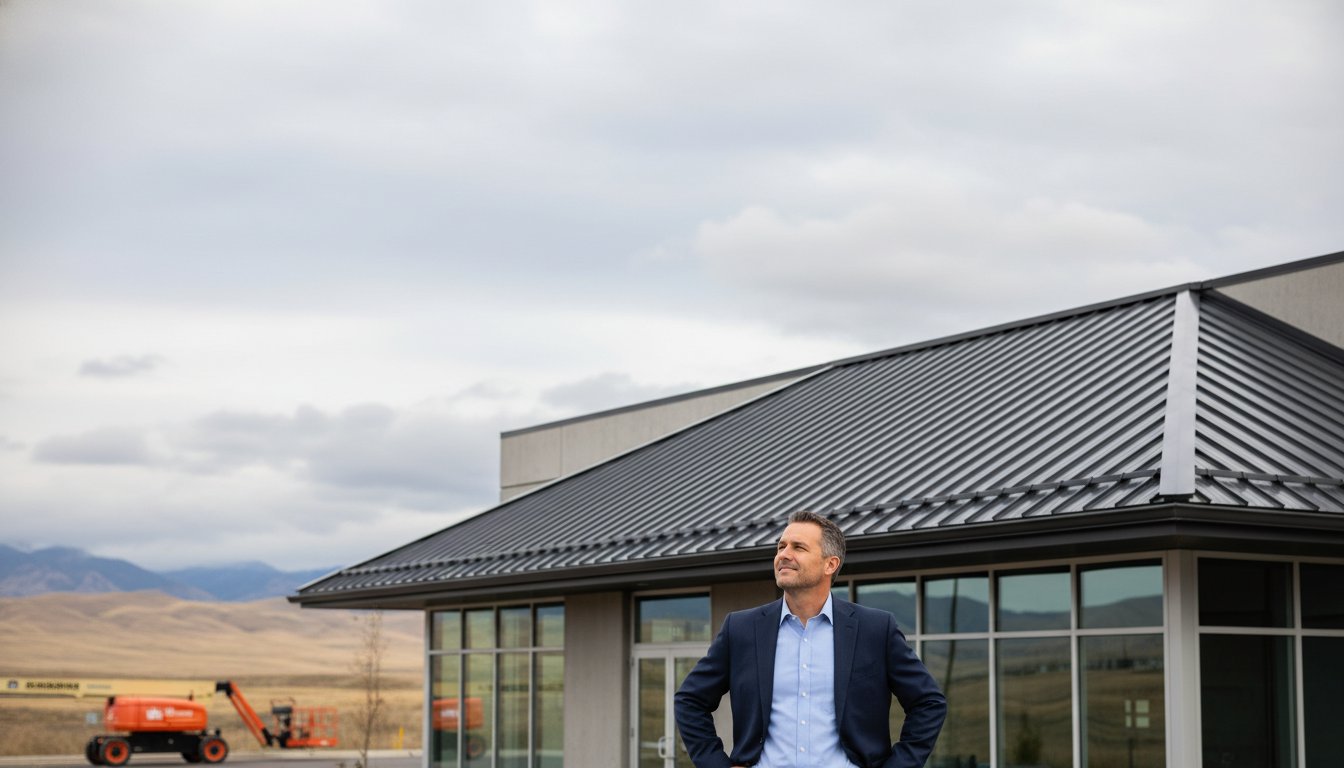
Choosing a contractor for commercial metal roofing involves more than comparing bid numbers. It's about finding a partner who understands the specific engineering demands of the Snake River Plain. With over 20 years of experience in the Eastern Idaho climate, Ridge Line Roofing and Renovation LLC has built a reputation on doing things right the first time. We know that a roofing project can feel overwhelming for a business owner, so we prioritize open, constant communication from the first meeting to the final inspection. Local expertise is non-negotiable when installing metal roofing Idaho Falls businesses can rely on for the next half-century.
We understand that your business doesn't stop just because your roof needs an upgrade. Our team is committed to a methodical project management style that minimizes disruption to your daily operations. We coordinate material deliveries and installation phases to ensure your customers and employees have safe, clear access to your facility at all times. This unhurried, transparent approach allows us to maintain the highest professional standards while respecting your building's primary function as a place of commerce.
Our Commercial Installation Process
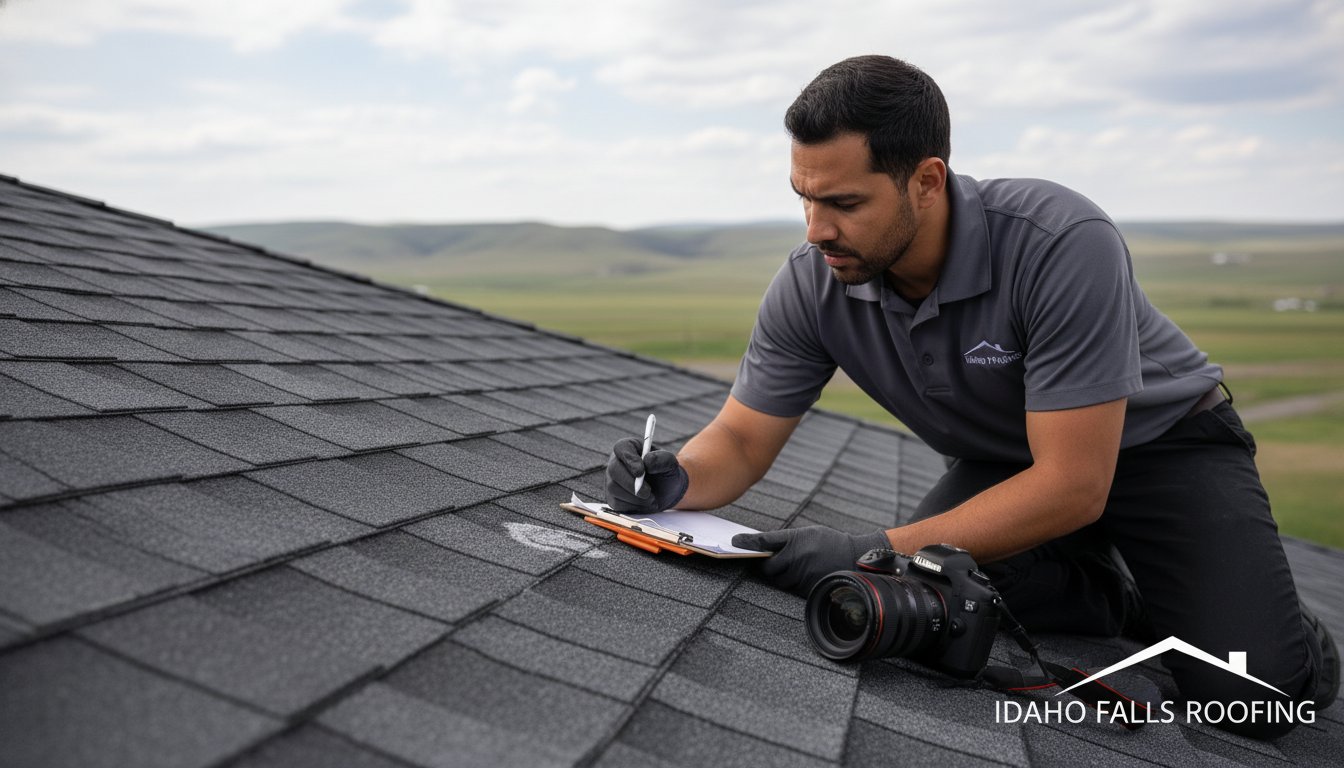
Every project begins with a thorough assessment, often utilizing drone technology to get a comprehensive view of your current system's condition. This data helps us plan for specific structural needs or drainage challenges before the first panel is ever delivered. During the installation, Ridge Line Roofing and Renovation LLC follows a strict safety and debris management protocol. We keep active business locations clean and organized, preventing nails or metal scraps from interfering with your parking lots or walkways. Once the job is done, we conduct a final safety walk-through with you to ensure every detail meets our meticulous standards. Because we're your neighbors, our local warranty isn't just a piece of paper; it's a commitment from a team that's here for the long haul.
Ready to Protect Your Investment?
As we've explored in this guide, 2026 is a pivotal year for Idaho business owners. Between the closing window of federal tax incentives and the long-term ROI of modern "cool roof" coatings, there has never been a better time to invest in a permanent protection plan for your facility. Whether you need a massive warehouse overhaul or a professional office upgrade, commercial metal roofing provides the durability and energy efficiency your building deserves. If you're also considering residential projects, you can view our home roof replacement Idaho Falls guide for similar local insights. Contact Ridge Line Roofing and Renovation LLC today to schedule a professional consultation and take the first step toward a maintenance-free future for your Idaho business.
Secure Your Building’s Future in Eastern Idaho
Investing in a high-performance roof is one of the most significant decisions you'll make for your property. By moving toward a permanent roof philosophy, you're choosing to eliminate the cycle of leaks and repairs that often plague traditional systems. commercial metal roofing provides the structural integrity needed to handle our local 90 mph wind gusts and heavy snow loads while offering a lifecycle that can span 50 years. You've seen how the right gauge and coating can lower your energy overhead and how to leverage current tax incentives before they expire.
Ridge Line Roofing and Renovation LLC is locally owned and operated in Idaho Falls; we bring over 20 years of local experience to every project. We specialize in high-wind and heavy-snow roofing systems designed specifically for our unique climate. Our team is ready to provide the methodical planning and transparent communication your business deserves. Get a Professional Commercial Metal Roofing Quote from Ridge Line Roofing and Renovation LLC today. We look forward to helping you protect your business for many decades to come.
Frequently Asked Questions
How much louder is a commercial metal roof during rain or hail?
Modern systems are not noticeably louder than other roofing materials when they're installed over a solid substrate and high-quality insulation. The layers of your building's roof deck and attic insulation act as effective sound barriers that dampen the noise from rain or hail. Most business owners find that the sound levels inside the building remain comparable to those with traditional asphalt or membrane roofs.
What is the average lifespan of a commercial metal roof in Eastern Idaho?
You can expect a professionally installed system to last between 40 and 50 years in our specific climate. This longevity is due to the material's ability to resist the intense UV radiation and extreme temperature fluctuations common on the Snake River Plain. While traditional commercial materials often require replacement every 15 to 20 years, metal remains a stable, long-term asset for your property.
Can I install a metal roof over an existing commercial roof?
Installing a new system over an existing roof is often possible through a process known as a retrofit. This approach can save you money on labor and disposal fees while providing an extra layer of insulation for your building. It's necessary to have a professional evaluate your building's structure first to ensure it can handle the additional weight and meets local Idaho Falls building codes.
Do commercial metal roofs attract lightning more than other materials?
Metal roofs do not attract lightning any more than any other type of building material. Lightning is generally attracted to the highest point in an area, regardless of what that point is made of. Because metal is a non-combustible material, it's actually a safer choice; if your building is struck, the metal helps dissipate the electrical charge without the risk of the roof catching fire.
How do metal roofs handle the heavy snow loads in Rexburg and Pocatello?
Metal is one of the best materials for high-snow regions because its smooth surface allows snow to shed naturally before it reaches a dangerous weight. We use specific engineering data for Rexburg and Pocatello to ensure the panel clips and structure can handle the pressure. We also recommend snow guards above entryways to prevent large amounts of snow from sliding off all at once.
What maintenance is required for a commercial standing seam roof?
Maintenance for commercial metal roofing is remarkably simple and mostly involves annual preventative checks. You should have a professional clear debris from the gutters and inspect the flashings around vents or chimneys to ensure they remain watertight. Because standing seam systems have concealed fasteners, they don't require the periodic screw tightening that exposed fastener systems might need over the decades.
Are there specific tax credits for installing a metal roof on my business in 2026?
Yes, federal incentives like the Section 179D deduction are available for businesses that install energy-efficient roofing systems. These credits are designed to reward owners who choose materials that reduce the building's overall energy consumption. You should consult with a tax professional to ensure your specific project meets the necessary energy-saving and labor requirements to qualify for these 2026 benefits.
How long does the installation of a commercial metal roof typically take?
Most commercial metal roofing projects are completed within one to three weeks, though the exact timeline depends on the size and complexity of your building. We focus on a methodical installation process that ensures every panel is perfectly aligned and secured. Our team works to coordinate the phases of the project so that your business operations can continue with as little disruption as possible.